An overview of the arguments I've heard for and against Chris Langham taking part in a Q&A at Bristol's Cube.
Some might feel this post is a bit of a cop out as I don’t really talk about my opinion on the Chris Langham invite. That is because I wanted it to be more of a space to illustrate the various arguments I have heard for and against his invite, and my own reactions to those arguments. My blog, my rules etc.!
When I heard via a member of Bristol Fawcett that Chris Langham is to speak at a Q&A in the Cube as part of the screening of his new film, my first reaction was shock, then anger. I admit I didn't know a lot about his case, but I knew that Langham had been convicted of and found guilty of downloading images of child abuse and rape, and had gone to prison for three and a half months. Was this another case of a known abuser returning to an open armed society, his crimes forgotten and brushed under the (red) carpet whilst those who have survived abuse are not privileged a voice? Or was it the case of a survivor of abuse acknowledging his crimes and trying to move forward with his life and career? Perhaps it was even something in between?
On Facebook, I expressed my shock about the invite which led to an interesting debate. Questions were raised about whether once time has been served, should and could a line be drawn under the crime. Whether there can be separation between the personal lives and crimes of people, and their work in films/TV etc. Whether my shock was akin to those who want to 'lynch' paedophiles and motivated by nimby-ism (it was neither). Then links were shared, regarding Chris Langham's own history as a survivor of child abuse, his admission of guilt and apology, and the ruling from the judge that there was no evidence to suggest he was a paedophile or sexually interested in children. His given reason for downloading the films (many of which his computer showed he hadn't watched) was, he stated, for research. He told Decca Aitkenhead that he believed he would get away with it, wouldn't get caught, that his 'art' would serve as an excuse ("It was just hubristic and arrogant of me to think I'm above the law because I'm an artist.").
I then spoke online to various volunteers from the Cube to try and understand their reasoning for the invite. I learnt that they had had lengthy discussions about whether to agree with the filmmakers' request to be accompanied by Langham. The Cube is run co-operatively in a non-hierarchical way so any decision is met by a group that then discusses and democratically proceeds by consensus. I haven't been able to define whether or not they expected the (albeit small) controversy that the invite has generated and I think they would have been naive not to expect it. Inviting any convicted criminal to speak would have sparked some controversy, not least when that someone has been convicted of downloading images of child sex abuse.
The debate continued via the BFN and Bristol Fawcett email lists. And it quickly became clear that for most the argument was not about my anger over how so often celebrity male abusers return to their careers, their crimes forgotten, whilst survivors of their crimes are all too often left behind, silenced. The argument became about how we rehabilitate, and how we decide whether or not someone has 'served their time'.
I have read messages from people who have worked with abusers and survivors who have expressed concern that by vilifying abusers we then deny them the chance to be defined by anything other than their abuse/crime. This then leaves no space or chance for that person to become anything else other than an abuser. This can lead to re-offending. I’ve heard that the chance of the abuser seeking support to stop offending is also reduced if they fear they are always going to be vilified and defined by their crime - something which again leads to re-offending. We then are led to ask about what sentencing means - once time is served is the period of punishment then over? This raises questions about whether our justice system is punitive or based on rehabilitation, and about what support is or should be available to offenders after prison time. The argument put forward to me by those who have worked in this field suggests that by vilifying offenders we then risk the abuser re-offending, as they are never allowed to see themselves as anything other than an abuser. However everyone I have heard from emphasises rightly that we mustn’t risk forgetting the survivor when we talk about offenders. The long lasting traumatic and health impact of abuse on the survivor may well be far longer than the sentence served by the perpetrator (I say 'may' as I do not wish to talk for survivors).
I appreciate and agree that vilification is not the answer. I believe this for many reasons - not least because when we see those who abuse and rape (children and adults) as 'monsters' and 'animals' and 'evil' then we rarely look at what causes the abuse and violence, and how our society allows/excuses this behaviour (particularly in relation to violence against women IMO). I also understand and agree that vilification (which so often leads to more violence and calls for the death penalty - something I am obviously against!) does not provide or allow for change and for rehabilitation.
However, one of the issues we have in our society is that sentencing for 'sex crimes', particularly rape and sexual assault of adults and teens, is so poor. We know that the rape conviction rate is 6.5% and we know that so many men get away with rape. Two thirds of reported rapes don't even get to court (www.cwasu.org) and even the conviction of group rape of a 12 year old girl can result in the men getting less than 12 months in jail. When we have a justice system that does not seem to consider, listen to, or even believe the voices of survivors, then it is understandable why there is a lot of anger when we see someone who is guilty of downloading images of child rape welcomed at our local arts cinema. We know that it isn't always as simple as 'served the time' because so many don't. And this 'don't' means that even when someone does serve time, we are always remembering that so many walk free.
My initial anger was that it seemed to me that Langham joined the footballers, Polanski, Chris Brown, Mike Tyson, R Kelly, Norman Mailer etc. – the list of men who have abused women and children and yet are culturally lauded, have cameos in cult movies, win Oscars and awards, are heroes. Because when this happens, when you sit there and listen to Rihanna being forced in interviews to praise the man who abused her, when you have to boycott yet another director because they are praising Polanski...when this happens over and over again you are left furious that these men who abuse women and children are repeatedly privileged over the survivors of their crimes.
I think my anger was based less specifically on the Langham invite, and far more on the crisis we have when it comes to sentencing rapists and abusers, convicting rapists and abusers, and ensuring justice for victims and survivors. It was also based on how often men who abuse are excused of their violence and misogyny and become cult heroes (or cultural heroes), defended and lauded in equal measure. When this happens, as it does so often, the voices of the abusers are privileged over the voices of survivors. The survivors of their crimes are forgotten, treated as an embarrassment, or as a liar, or as to blame etc. And this is simply not fair. In fact, it's plain wrong.
So, this post has been meandering and tentative. I have tried to explain why I was angry with the invite, and why I think my anger was based less on the specific invite and more about a rape culture that excuses abusers. I think this holds true to a lot of abusers in the public eye (although I understand and appreciate the arguments about why this may not apply to Langham). I have tried to present the arguments I have heard about why rehabilitation is important and can prevent re-offending and how these arguments have raised important questions. And I hope I have explained why I disagree with vilification, seeing as it refuses to acknowledge the causes of violence and abuse. As I say, I have asked myself a lot of questions about this and I won't be attending the event, I don't support the event. But one good thing is that it has raised these questions and arguments, as well as allowed me to start considering ways we can have events that give voice to survivors of abuse, when so often those voices are silenced.
Thursday, 12 January 2012

Wednesday, 4 January 2012
Femicide
Since 1st Jan 2012, Channel 4 News has reported the deaths of 4 women as a result of intimate partner violence, otherwise known as domestic violence. Another woman's body has also been found although it is believed she was murdered last year.
That's more than one woman a day since 2011.
The news seems to be preoccupied with the fact that one of the women's bodies was found on the Queen's land. The BBC had the Countryside Alliance on to talk about why people should be allowed guns.
The news has yet to report on how these murders are all part of the huge problem of violence against women and girls and misogyny.
Published with Blogger-droid v2.0.2
Monday, 2 January 2012
The Sian and Crooked Rib Feminist Review of 2011
Review of 2011
2011 was a big year for news and a big year for the so-called resurgence of feminist activism in the UK (I say so-called as feminist activism never went away, we've just been doing it behind the media's backs since 1985 apparently!). It was also a big year for me - the year I published two books, Greta and Boris and The Lightbulb Moment, spoke at a number of academic conferences, won awards for my professional work and went on a lovely holiday to the Caribbean.
So, like many bloggers and writers out there, I present to you my review of the year from the feminist perspective, as we look back on 12 months that, despite many fantastic achievements, showed us how clearly the battle for women's rights is not over, how we still live in a rape culture, and how both the left and the right are willing to trade away women's rights when it suits them. I'll link to other posts I've written this year in case any of the stories tickle your fancy.
Jan 2011:
The tragic murder of Jo Yeates in December 2010 sent shockwaves through my home city of Bristol. Our thoughts and love was with her family and friends. Her murder resulted in the police sending out safety warnings to women living in the city to avoid walking home after dark and to avoid being on their own in the streets, leading to frightened young women taking cabs everywhere, and avoiding taking part in volunteer activities. Even I was given a talking to from a colleague when I said I was walking up to Clifton to see a friend. This was despite the fact that the evidence suggested the attack took place in her home. BFN responded by having a meeting with Avon and Somerset police and issuing a statement, resulting in the police changing their safety advice so that a woman's right to freedom of movement was not compromised by the deliberate actions of one man.
http://sianandcrookedrib.blogspot.com/2011/01/bfn-response-to-polices-warnings-re.html
Sky Sports pundits Andy Grey and Richard Keys showed sexism in sport is alive and well when they discussed in anger the fact that there was a 'woman linesman' refereeing a match, followed by a frankly disturbing conversation about 'smashing' women. Resignations and firings happened, followed by the usual backlash that women lack a sense of humour and that women are sexist too. After all, Giles Coren, we have Loose Women, don't we!
http://sianandcrookedrib.blogspot.com/2011/01/sky-sports-loose-women-sexism-and.html
I didn't really write anything this year about the Arab Spring, which began at the start of 2011 in Tunisia. I don't know why I didn't (it has been such a busy year). The uprisings in the Middle East came to define this year. Women played an active and leading role in protesting the oppression they experience in their countries - and are still playing that role today as new governments are formed, or as the violence continues. So, to make up for my failings, here's a piece in Ms magazine by Robin Morgan: http://www.msmagazine.com/spring2011/womenofthearabspring.asp
Feb 2011:
Assange continued to be in the media spotlight as he appealed his extradition to Sweden on the grounds, it seemed, that he would be smuggled in to the USA. At the height of Assange fever we observed an ugly tendancy by some on the left (including former heroes of mine - looking at you John Pilger) to sell women's rights down the river in support of man who had done good work in exposing international corruption but who, despite that, was accused of rape. Unfortunately the idea that someone is capable of doing good work and still be a misogynistic shit was hard to grasp by many. Left commentators (men and women) accused the women of being a CIA honey trap, postulated conspiracy theories, tied themselves up in rhetorical knots trying to 'prove' that penetrating someone when they are asleep was not rape, and mocked the idea that penetrating someone without a condom, when consent relied on the presence of a condom, was some kind of hilarious Swedish law. Whilst Assange was treated as a hero by the left (and even, when they saw a way to blame women, by the Daily Mail!) the women were mocked, derided, accused of lying and much more. Their actions were critcised as they 'didn't behave how victims are supposed to behave' (apparently there's a guide book?) and because 'he stayed at their house and they went to a party' (because unless it's stranger rape it ain't real rape - more on this later). As I said at the time, and as I still say now, conspiracy theories to do away with powerful white middle class men via CIA honey pots are far, far less common than a man sexually assualting or raping two women. Assange is still appealing the extradition decision.
March 2011:
March saw me share a panel with the wonderful Bidisha and Dr Sue Tate at the Watershed as we talked about the invisibility of women in our culture. It also saw me get called a 'hysterical ranter' and lots of other names on Liberal Conspiracy, for daring to suggest on International Woman's Day that, you know, prehaps maybe there's an international crisis when it comes to VAWG. I also started writing for the Fresh Outlook, and my first piece dealt with the change in regulations for dealing with rape cases, after a woman was imprisoned for 'falsely retracting a rape claim'. The woman had suffered years of violence at the hands of her husband and when she reported it, he pressured her to withdraw her accusation. She then found herself guilty of perverting the course of justice, in jail and having lost custody of her children. This horrific case showed us what happens when women aren't supported in making accusations against violent partners, what happens when the media narrative on rape focuses on alleged false accusations and why the guidelines certainly needed to change. http://sianandcrookedrib.blogspot.com/2011/03/new-guidelines-for-dealing-with-rape.html
One of my most popular posts of the year was about a Daily Mail article (recently cited by women's groups at the Leveson Inquiry) about the gang rape of a 12 year old girl and the rape of her 13 year old friend. The article called the girls Lolitas and pretty much blamed them for the violence committed against them. The men were found guilty, but were eventually released on appeal. This is the first time I have seen child rape blamed on the victim, both by the newspaper, the judge and the commenters below the fold. http://sianandcrookedrib.blogspot.com/2011/03/daily-mail-fail.html and http://sianandcrookedrib.blogspot.com/2011/07/daily-mail-justice-and-child-protection.html
March also saw dire warnings from Women's Aid about the impact the government's austerity measures would have on women, particularly women survivors and victims of male violence. The cuts are resulting in the closure of refuges, in support services losing all their funding and being forced to close and will, ultimately, result in the murders of more women. The government are playing with women's lives and their answer is to tell councils not to see it as an easy cut. In response to the Women's Aid statement I wrote to the coalition leaders to find out what they were doing to make this stop. I collected nearly 400 signatures in a week. Theresa May sent a disappointing response and the party I voted for, the Lib Dems, well, they didn't even bother to reply.
http://sianandcrookedrib.blogspot.com/2011/03/governments-war-on-women-continues.html
http://sianandcrookedrib.blogspot.com/2011/03/rape-crisis-in-crisis.html
http://sianandcrookedrib.blogspot.com/2011/04/open-letter-to-cameron-clegg-may-and.html
http://sianandcrookedrib.blogspot.com/2011/06/response-from-theresa-may-to-my-letter.html
April 2011:
In April we all got excited about fetishizing brides, the area I have lived in most my adult life caught fire and got smashed by rioters who were angry about Tesco (http://sianandcrookedrib.blogspot.com/2011/04/musings-on-what-happened-on-stokes.html) and I got embroiled in an online row across twitter and the New Statesman despite not knowing half of what had happened. Meanwhile, a serious scientific report postulated that feminism is bad for women's sex lives because women are naturally submissive (like rats!) (http://sianandcrookedrib.blogspot.com/2011/04/is-feminism-bad-for-your-sex-life.html) and the Poppy Project lost funding as the government once again played roulette with women's lives and well-being (http://sianandcrookedrib.blogspot.com/2011/04/funding-cuts-sex-trafficking-and-ashton.html). France banned the burqa via a logical leap that telling women what they can and can't wear is somehow more liberating than letting women wear whatever the hell they like (http://sianandcrookedrib.blogspot.com/2011/04/liberation-via-oppression.html).
May 2011:
I went to ATP! And then came down with a horrific bout of flu that left me so delirious I cried at the Fleetwood Mac episode of Glee...
Meanwhile Ken Clarke showed his ignorance around rape when he tried to split it into two categories 'violent rape' and 'you know, that other kind of rape that isn't violent'. His comments exposed what feminists have known for years; there is a huge issue when rape is only considered to be violent or 'real' if it is committed by a stranger, outside (or an intruder) with additional physical violence, and that issue is that rape is rarely taken seriously. All of this works together to create a culture where women aren't believed, where women are blamed for the violence committed against them and we end up with 90,000 rapes a year and a conviction rate of 6.5% (see this post for stat sources: http://sianandcrookedrib.blogspot.com/2011/08/why-its-diallo-not-strauss-kahn-who-has.html). His suggestion that low rape sentences (5 years or less) were the result of teen boys having consensual sex with their 15 year old girlfriends showed not just a very troubling ignorance about rape law, but also a very troubling ignorance about how messed up sentencing for rape is (the men mentioned in the March Daily Mail article were out within a year) and how comments like his encourage a rape culture where women aren't listend to, believed or taken seriously.Clarke's comments were exacerbated by Roger Helmer MEP, who wrote a blogpost about how if a woman gets into bed with her boyfriend, she should expect that he will have sex with her (whether she wants to or not), followed by distressing editorials from Littlejohn and Hitchens full of lies and nonsense about false accusation rates, and women lying about rape because they 'regret sex' the next day. For the record, there are an estimated 90,000 rapes in the UK every year. The majority will be committed by someone the victim knows. (http://sianandcrookedrib.blogspot.com/2011/05/ken-clarke-roger-helmer-daily-mail.html)
And those two weren't the only Tories pissing feminists off in May 2011. Oh no. David Cameron's sexism was showing when he told Angela Eagles to 'calm down dear' (http://sianandcrookedrib.blogspot.com/2011/05/calm-down-dear.html) and Nadine Dorries proposed a bill for abstinence only education for girls (and only girls) in her continuing war against women's bodily autonomy and reproductive rights (http://sianandcrookedrib.blogspot.com/2011/05/nadine-dorries-just-say-no.html).
May also saw the start of the Slutwalk movement, as a Toronto police officer warned a group of young women that if they wanted to avoid being raped, they shouldn't dress like sluts. As well as getting lots of press attention the Slutwalk debate caused a lot of conversation across the feminist movement, as people asked whether it was possible to reclaim the word slut, discussed the actual aims of the movement, asked questions about privilege and why, in Canada and the US, so many slutwalkers seemed so anti-feminist. I think the Slutwalks in the UK seemed really positive and succeeded because they got the message out there about victim blaming and VAWG. I still do have questions though. A lot of them.
Also, DSK was arrested - more of that later.
June 2011:
Halfway there! In June I decided to write about street harassment again (http://sianandcrookedrib.blogspot.com/2011/06/i-am-hollaback-grrl.html) and I loved Caitlin Moran's book (http://sianandcrookedrib.blogspot.com/2011/06/book-review-how-to-be-woman-by-caitlin.html). After BFN got attacked - again - I wrote about why the work we do is so great (http://sianandcrookedrib.blogspot.com/2011/06/lets-celebrate-bfn.html) and I put on an event about VAWG in the DRC (http://sianandcrookedrib.blogspot.com/2011/06/where-are-women-speech-for-drc-event-at.html). In other news, the Playboy Club opened with a fabulous feminist protest shouting eff off Hef! (http://www.guardian.co.uk/lifeandstyle/2011/may/31/playboy-hugh-hefner-sexism).
July 2011:
If the accusations against Assange highlighted how the left will still defend a man accused of rape, then the case against Dominique Strauss-Kahn showed how society closes ranks to protect the powerful against rape accusations. When he was arrested in May, I saw the footage of him being bundled into the car. And I said, he'll never go to jail. He'll get away with it. His story changed many times, from him saying he wasn't even in the building, to him saying he was there and whatever happened was consensual. Yet, this changing his story did not seem to destroy his credibility. Meanwhile, his alleged victim Diallo was called a prostitute. A liar. She was told she wasn't credible because she hadn't disclosed her 'FGM status' to immigration. She was accused of trying to extort money, and when this accusation proved untrue, well let's just say that that story didn't get the coverage the false one did. The very normal traumatic symptoms that many rape victims demonstrate were used to discredit her - she lacked 'perfect recollection of the night's events' and her narrative structure kept changing (this is perfectly normal). She wasn't the 'perfect victim'. She was poor, black, an immigrant. He was rich, white, a world leader. Diallo's bravery in waiving her right to anonymity opened her up to more and more personal attacks. This woman did a brave brave thing. She has had her life ruined, because she dared to stand up and say that (if he did it) it wasn't acceptable for a man to allegedly assault her. That she wasn't going to stay silent because he was more powerful than her.
Because the case collapsed we will never know if DSK was guilty of rape or sexual assault. Because he has dropped the case against her we will never know if she was guilty of false accusation. Currently neither are guilty of any crime. But we learnt from this that even now the alleged victims are the ones on trial, not the alleged perpetrator.
http://sianandcrookedrib.blogspot.com/2011/07/media-reporting-on-rape-daily-mail-and.html
http://sianandcrookedrib.blogspot.com/2011/08/why-its-diallo-not-strauss-kahn-who-has.html
Meanwhile, the accusations against Assange rumbled on. During his extradition hearing, his own lawyer, his DEFENSE explained that he had penetrated a sleeping woman. That, whichever way you slice it, is rape. A woman can not give consent if she is not awake.
http://sianandcrookedrib.blogspot.com/2011/07/daily-mail-justice-and-child-protection.html
August 2011:
In August, the Scientific American published a ridiculous article positing that porn reduced incidents of rape. This was based on research that showed that rape was less common in areas of the USA where there were lots of internet users. Seeing as porn is not the sole cause of rape, and seeing as porn is not the sole content of the internet, this research was Bullshit (http://sianandcrookedrib.blogspot.com/2011/08/porn-sexual-violence-and-scientific.html).
Meanwhile, Britain caught fire as riots raged across London and beyond. The rhetoric in the aftermath spent a lot of time blaming 'broken families' and therefore single mums, so I wrote this in a rage: http://sianandcrookedrib.blogspot.com/2011/08/single-mums-are-alright.html.
And Dorries made a comeback as she tried to push through a law restricting women's rights to abortion. She proposed that charities that provide abortion services - such as Marie Stopes and the BPAS - should be prevented from offering pre abortion counselling, as they had a 'financial incentive' to 'encourage' the woman to have an abortion. This is of course nonsense, and such a proposed change would prevent charities with a proven record in great care for women offering an expert and needed service. They would then of course be replaced by anti abortion groups with a bias and interest in preventing a woman from having an abortion she may want or need. The proposal was debated but defeated in parliament. However this year has seen a very real attack on the right to abortion. Life replaced the BPAS on the government's sexual health advisory board - FTR, Life don't believe condoms prevent STDs. In the states, the personhood amendment came close to being a reality. This year showed us that we can't rest on our laurels if we want to maintain our right to bodily autonomy.
Debates about 'fun feminism' seemed to take hold across the feminist blogosphere - here were my takes on it:
http://sianandcrookedrib.blogspot.com/2011/08/some-musings-on-fun-feminism.html
http://sianandcrookedrib.blogspot.com/2011/08/bristol-feminist-network-and-what-we.html
September 2011:
I go on holiday! I turn 27!


I get involved in an online row with a really, really sexist, white male privileged and deeply unfunny TV comedy panel show!
http://sianandcrookedrib.blogspot.com/2011/09/mock-week-mock-women.html
Some numpty sues LSE because he found gender studies sexist!
http://sianandcrookedrib.blogspot.com/2011/09/gender-studies-sexism-male-bias-and.html
October 2011:
Three women won the Nobel Peace Prize in October, making them the 13th, 14th and 15th women to do so in 111 years. Yet despite this, Ellen Johnson Sirleaf, Leymah Gbowee and Tawakul Karman failed to make it in the BBC's 2011 Women of the Year list - that honour went to brides, bridesmaid-with-nice-ass, victims and, erm, a panda. http://sianandcrookedrib.blogspot.com/2011/10/three-women-win-nobel-peace-prize.html
David Cameron announces he is in favour of gay marriage (or, as I like to call it, marriage) but that doesn't stop the right wing press being homophobic, whilst ignoring that the problem is their homophobia: http://sianandcrookedrib.blogspot.com/2011/10/daily-mail-and-sunday-telegraph-and.html (this is one of my least read posts, but one I am most proud of)
Meanwhile, the much-derided-by-feminists Bailey Review into the sexualisation of children continues its mission to suggest that it is only bad to degrade women if someone under 18 sees it by suggesting that blocking porn sites would be a good idea. Rather like putting a band aid on a broken leg in my opinion. You can't just block young people from seeing porn when the issue is the acceptance of violence against women, women's degradation and the harm done by the porn industry. http://sianandcrookedrib.blogspot.com/2011/10/blocking-porn-is-not-answer.html
Meanwhile, rape culture shows it is alive and kicking as two big victim blaming stories make the feminist headlines. The first involved a school attempting to ban girls wearing skirts 'for their own protection'. By refusing to deal with the causes of sexual bullying, harassment and violence, the school is letting down its female students, who are instead told that any violence committed against them is their fault for wearing a skirt. http://sianandcrookedrib.blogspot.com/2011/10/rape-culture-and-victim-blaming-starts.html Meanwhile, as department stores start playing Christmas songs, the annual Christmas anti-rape campaigns appear. This year we saw some welcome posters that targeted men. But that didn't stop some men bemoaning them as offensive, whilst the usual fare that tell women to avoid becoming victims were still there (http://sianandcrookedrib.blogspot.com/2011/10/anti-rape-campaigns-men-and-offence.html).
The Occupy movement swept the world, as groups came together to protest a capitalism that benefited 1% of society at the expense of the 99%. Unfortunately, disillusionment set in quickly to me. London invited Assange to come and speak, a man accused of rape yet still loved by some of the left. Considering women are disproportionately affected by poverty and bad capitalism, I don't know why they couldn't find a woman who wasn't accused of rape to come and speak. Meanwhile, rapes and sexual assaults were reported in the camps - along with victim blaming from men in the camps, and stories that the women were told not to go to the police in case it 'harmed the movement'. In Bristol, Occupy members have been rude to BFN and Fawcett on mumerous occasions, demonstrating an unwilligness to see that women make up more of the 99%, and men more of the 1%. A revolution that maintains male privilege is not a revolution at all. We canont have change if we don't challenge the power structures that maintain the oppression of women. To me, Occupy is behaving as though it is for the 49%. As a woman, I am not made to feel welcome. http://sianandcrookedrib.blogspot.com/2011/10/im-woman-im-excluded-from-99.html
Our campaign to raise awareness of women's rights in Afghanistan culminated in a vigil on Pero's Bridge, where we demanded that women have a voice at the peace negotiation table, and that women's rights aren't traded away for peace.
http://sianandcrookedrib.blogspot.com/2011/10/no-women-no-peace-vigil-tonight.html
http://sianandcrookedrib.blogspot.com/2011/09/womens-rights-in-afghanistan.html
November 2011:
November saw the publication of Bristol Fawcett's report into the impact of the cuts on the women of Bristol. Shocking stats revealed that the changes to the tax and benefits system would cost the city's women £44 million, double the cost to men. The impact of the austerity measures on women is one of the great under-reported stories of 2011, and I was proud to be ever-so-slightly involved with this project to reveal just how bad things are.
http://sianandcrookedrib.blogspot.com/2011/11/fawcett-protest-coalition-has-cost.html
http://sianandcrookedrib.blogspot.com/2011/11/bristol-fawcett-report-reveals-impact.html
Helen Lewis-Hastely's report in the New Statesman on online abuse experienced by women bloggers catapulted an issue we had all experienced and known about for years anyway into the mainstream. Conversations about the very specific type of sexist abuse women experience online suddenly dominated the blogosphere. This is not a new issue, but it was great to have it being talked about and debated, even if the inevitable backlash decided that rather than challenge male abuse, women should just get off the internet. This was the most read blogpost ever on my blog!
http://sianandcrookedrib.blogspot.com/2011/11/my-guide-to-online-abuse-and-excuses.html
I went to Fem 11 and was totally inspired by the wonderful Natasha Walter:
http://sianandcrookedrib.blogspot.com/2011/11/fem-11-series-women-for-refugee-women.html
http://sianandcrookedrib.blogspot.com/2011/11/fem-11-series-evaw-coalition-and-media.html
http://sianandcrookedrib.blogspot.com/2011/11/fem-11-series-feminist-question-time.html
Bristol Reclaim the Night was one of the best we have ever had. A fantastic turnout, amazing speeches and a fab after party helped us raise awareness of why violence against women and girls persists to be a problem in our city and internationally. Speakers talked about rape, intimate partner violence, the impact of the cuts on VAWG, FGM and violence against women and girls in Afghanistan. Meanwhile, the revelation in the Bristol Fawcett report that there are 130 rapes in Bristol every month (20 reported on average pcm) clearly showed why we are still fighting this fight.
http://sianandcrookedrib.blogspot.com/2011/11/130-rapes-per-month-operation-bluestone.html
December 2011:
Exhaustion set in. So many issues to write about and campaign on this year meant that by December, I had no energy left to write.
So I published a book instead: http://sianandcrookedrib.blogspot.com/2011/12/crooked-rib-publishes-light-bulb-moment.html
Meanwhile, the Leveson Inquiry is asked to look at sexism in the media, particularly how media reporting on rape, and the objectfication of women in the media, encourages violence against women and girls: http://www.guardian.co.uk/media/2011/dec/29/leveson-inquiry-sexist-offensive-reporting
And, that's it! My very very long review of the year! Jan 2012 marks the 5th birthday of my blog. Thanks for all sticking with me. You all rock!
Happy New Year everyone!
Thursday, 15 December 2011
The Winter Takes It All
Me, Griggz, Mr Scruff Scruff and Nanna d Knits made a song for Christmas!
We are the band 'The Winter Takes it All' and the song is called 'A Christmas Without You'
It's for the Choke advent calendar and you can hear it if you click on number 15
We are the band 'The Winter Takes it All' and the song is called 'A Christmas Without You'
It's for the Choke advent calendar and you can hear it if you click on number 15
Or you can hear it on Soundcloud
There's even a remix! By Jo
Saturday, 10 December 2011
Book review: feminism in the news
It must have been at some point between 2009 and June 2010 when Kaitlynn Mendes, a Senior Lecturer in Journalism at De Montfort uni called me for my views on feminism and the media. I talked a lot about how it can be tricky to get press attention for non London events, the way the press either ignored, mocked or silenced feminism (with some notable exceptions) and the struggle of getting noticed when the press was always telling you you didn't exist (unless they were telling you you were sour-faced harridans). We had a great chat and then I promptly forgot all about it until a month or so ago, when Cath Redfern sent me a twitpic of my name in the index of the book 'Feminism in the News'. I was in a book! Wahey!
Kaitlynn then very kindly arranged for me to be sent a free copy to review and I devoured it in a matter of a weekend.
This is an academic textbook that can be read by the non-academic (me!) and understood and loved by those who aren't using it as a source text for essay writing. The book is easy to read, thorough and fascinating, taking the reader on a journey through feminist history between 1968-1982 as seen by the news. The language is readable and not filled with academic jargon, whilst never compromising on meticulous research, sharp analysis and interesting conclusions.
The book is split into three sections - although there are two additional introductory chapters. The first deals with how The Times, The Daily Mirror, The Chicago Tribune and the New York Times reported The Women's Movement. The second analyses how these papers reported equal rights and the final section looks at how feminism was reported in 2008, across those four papers and The Washington Post, the Washington Times, The Guardian and the Daily Mail.
Mendes found that reporting of the women's movement and equal rights could be split into supportive, critical, and seeing feminism as contradictory. Some of her findings surprised me. For example, The Daily Mirror had a very anti-feminist tone throughout the period that loosley defined the second wave - something perhaps based in its appeal to white working class men audience. Rather than embracing feminism as a movement for positive social change, the Mirror saw it as harmful and dangerous, and gleefully reported backlash style stories to show how feminism had 'failed'. Contrary to my belief, the backlash against feminism as we understand it began a lot earlier than it's 1980s hey-day, with a 1970 Mirror article introducing 12 year old Linda Greally who believes it's 'wrong to be equal', and the 1976 article 'Why Adrienne doesn't want to be man'. This latter piece blames feminism for family breakdown and demonises women's libbers as mums who 'dump' their kids. Familiar tropes that seek to blame feminism for all social ills therefore appeared as early as the 1970s, with feminism blamed for shoplifting, bullying, crime etc. - something we still see today in Daily Mail headlines.
Negative reporting tended to focus on presenting feminists as 'deviant' - the usual man-hating, bra-burning steretypes, or else they focused on how feminism was irrelevant or out of touch from women's lives. Little has changed! Other criticisms offered a paternal view that the goals of feminism were legitimate (of course women *should* have equal rights) whilst the movement itself is illegitimate (we just don't think they're doing feminism right). Other critcism (again, plus ca change!) denied that there was a problem with inequality all together, suggesting that the problem wasn't with society, but with the feminists themselves. After all, says Mrs DMM from Kettering in 1970, don't these women enjoy being feminine?
The Times was more supportive of feminism and the fight for equality and women's rights - again quite surprising in some ways, known as it is for its conservative slant. Articles recognised the need for change and, along with the NYT, sought to legitimise feminism. This can be problematic in itself - the journalism that sought to make feminism palatable and 'nice' risked de-politicizing a movement, again an issue we still see today. For example, when the Daily Mail reviewed Natasha Walter's book 'Living Dolls', they wrote how lovely it was that she wasn't angry. She told a packed audience at FIL 2010 how much this annoyed her - she is and was, after all, very angry. Journalism that sought to legitimise, as well as support, feminism found itself reporting that the movement was full of 'normal' (i.e. white, middle class and straight) women. Again, whilst there was perhaps a well meaning positivity in this reporting, it not only resulted in selling feminism as just a movement for white, middle class straight women; it also toned down the angry, political and radical demands the women's liberation movement was fighting for. It was complex, as feminists were also willing to comply with this 'normalising' portrayal in an effort to not be seen as elitist or out of touch or 'fringe'.
Mendes found that out of her four publications between 1968-82, the Chicago Tribune was the one most likely to report on black women's issues and feminisms. These articles acknowledged the intersectionality between the oppressions of race and gender. Articles focused both on the tensions and the benefits of collective activism.
The second section of analysis explores the equal rights movement, particularly on reporting of the fight to pass the ERA in the states, and other legal rights to equality in the UK. Similar patterns were found - with some articles legitimising the movement, others focusing on the backlash, with papers using women who were against feminism (e.g. Phyllis Schafly) to 'prove' how unpopular the movement was.
Mendes focuses on the key issue of who was writing about feminism and where these articles appeared in the papers. Just like today, all too often women's issues weren't treated as 'news' but instead found themselves sidelined into features or comment. Even in 2011, if you're reading about VAWG in the DRC, or the pornification of culture, or lack of women's political representation on the Guardian website, you'll find you're in 'Life and Style'. News about women is still seen as special interest, for ladies only. Just as it was 40 years ago.
The final section was about reporting feminism in 2008 and included four additional papers, The Washington Post, the Washington Times, The Guardian and the Daily Mail. In some ways this was the section that was most relevant to me (and I'm in it!) although that does not mean that the journey to 2008 wasn't equally as fascinating and extraordinary in how some things were better than I imagined, and some things were exactly as I expected.
Mendes' research found that in 2008, popular culture was the most common 'news peg' to talk about feminism - i.e. it was used as the stepping stone to open up a feminist conversation. This results in articles such as 'Is SATC feminist?'. This can be seen as a way of trying to legitmise feminism - making it relevant to the 'normal' woman's life, but, as before, it can also de-politicize and trivialise feminism, as well as making it all feel very conceptual and not very 'real life' in itself. I mean, although as a feminist I care about how popular culture creates and shapes our attitudes towards women, winsome musings about how Bond Girls are feminist icons are not really getting to grips with what feminism means as a social movement for change. Politics was the second most popular news peg - from the Mail attacking the 'ultra feminist lobby' of Harriet Harman, to papers exploring Palin's self-declared grizzly mama style of feminism and her role in US politics - gender or otherwise. The final news peg was activism, with actual feminist events getting news coverage. My bit!
The book analyses how the papers explored 'issues associated with feminism' such as sexual objectification, equal pay and the glass ceiling. Mendes found that a higher-than-expected number of articles sought to legitimise feminism as a movement for good. However, were these articles always political? Some focusesd on how women can wear lipstick and still be a feminist - this way of making feminism pretty and non-scary could again be seen as legitimising feminism whilst ignoring its political anger and need for change. Few articles looked at radical discourse - identifying patriarchy as an oppressive force.
Just as in the first two sections of analysis, the anti-feminist articles followed a predictable pattern. Feminists are deviant - and crucially 'unattractive to men'. So, whilst some articles were gleefully informing women they can still wear pink and fight patriarchy, others continued to warn that if you're a feminist, then no-one will fancy you. Feminism is still portrayed as anti-family - bringing back to life the idea that feminism is not only bad for children, but bad for women as well. These articles promote the belief that 'having it all' is making women depressed and their children delinquent - whilst of course never questioning the fact that 'having it all' never meant 'doing it all'.
The good news is though that thanks to a lot of explicitly and unapologetic feminist journalists, women's stories and feminist issues are being reported positively. The movement is being legitmised by these writers who manage to do so without compromising the politics and radical demands. In my own personal observations this has continued to get better and better, as more and more women and men get involved in feminist activism. I would love for Kaitlynn to analyse 2011. Slutwalks? Playboy protest? Muff march? Anti cuts activism? The Arab Spring? These haven't been fringe stories confined to the blogosphere and one newspaper. Feminism is making headlines again - and it won't be long before we're out of the life and style pages forever.
http://www.amazon.co.uk/Feminism-News-Representations-Womens-Movement/dp/0230274455/ref=sr_1_1?ie=UTF8&qid=1323538087&sr=8-1
Book review: the musings of a monkey
I started reading the blog 'The Enemies of Reason' when it was still written by Anton Vowl, in 2009. I think I found it the day the Jan Moir/Stephen Gately scandal broke, and the world of media blogs opened up to me, including Tabloid Watch, No Sleep til Brooklands, Five Chinese Crackers and Angry Mob. Enemies of Reason quickly became one of my favourite blogs - funny, perceptive, honest and articulating everything about the lies in the press that I had always suspected, but had hitherto been unable to concretely prove.
Via Twitter and the blogosphere, Anton (as he was then known) and I became online friends (I hope!) and when I had my first brush with the press telling lies about me, he was one of the people I turned to for advice on how to tackle it. Eventually Anton revealed his true identity as Steve Baxter in a column on Comment is Free, and was quickly snapped up to write for the New Statesman, commenting on media behaviour.
In 'Musings of a Monkey', Steve has brought together some of his favourite blogposts from Enemies of Reason, Farewell Prozac and Warm Cherryade. I had only read Enemies of Reason online, so not only was I happy to re-visit old favourite and un-remembered gems, but I was also pleased to have the chance to read Steve's writing on other subjects, particularly on mental illness, depression and anti-depressants.
The book opens with blogs taken from Enemies of Reason. From insightful comment on news stories of the day (B&B couple banning gay people, and Daily Mail reaction), to how the media works and what it reports (sports personalities' sexual proclivities) and political questions (why we shouldn't wish Thatcher dead); this section meanders into delightful ponderings on what biscuits are best (Viscounts) to the best animals beginning with 'o' (otters. obviously). The joy in revisiting these blogposts is in Steve's writing. His style is very honest, and witty, sometimes sarcastic but never nasty or aggressive, sincere and clear. Sometimes the posts are written in an analytical way, as he takes us through a breakdown of a news story or item. Sometimes he writes very amusing satires of articles. And other times they're just musings of his own, that thanks to his fantastic writing ability and clear voice, never fail to entertain.
Truly in my mind Steve is one of the best writers composing blogs on the internet at the moment, and has been for as long as I have been reading his words.
It is hard to pick a favourite post in the opening of the book, but I do love and always have loved his 'What about the men' piece. Whilst I wrote four sides of A4 trying to explain just how angry I was with Giles Coren and the like, his short and criticial piece on what-about-ery summed it all up neatly and with humour. He manages to pinpoint exactly what it is about the argument that makes it so ludicrious - whether it's what about the men or Daily Mail hate - and quickly and clearly shows off the ridiculousness of it all, without falling into traps of being rude, aggressive or snide. Other favourites include his Lefty baiting: an idiots guide and The A-Z of Internet Commenting. The post on why we shouldn't wish Thatcher dead is also a stand out moment to me. Again, this post expresses the anger at Thatcher's legacy in a way that is clear sighted and meaningful without descending into cliche.
Warm Cherryade is rather a move away from the politics and media commentary and lists of Enemies of Reason. This was a side to Steve's writing that I hadn't really encountered before; observations, memories, short and delicate pieces of prose that capture every day moments, such as giving a spider a lift to work. Odes to cultural icons like Teletext. And reflections on blogging, fear and hope. It's hard to capture the section because there is this diversity there, but it all felt quite personal and quiet - in good ways. I love the idea of giving the spider a lift to work. It is such a lovely observation of something that is otherwise quite inconsequential.
Moving on to Farewell Prozac. In some ways I found this the hardest, but also the most inspiring, section of the book. It is very honest. Like Steve's writing on other subjects, the honesty is what makes it so absorbing and refreshing to read. We learn about triggers and making peace with those moments, those places that threaten to kick off episodes. The physical feeling of depression as well as the emotional feelings. The difficulties of coming off anti-depressants, and the sometimes need to go back on them is conveyed simply and carefully. The importance of recognising that going back on to medication is not a 'fail', but just something that needs to continue for a while, is dealt with in a clear sighted and accepting way. It made me think a lot about my own period of depression and mental unwell-ness (as I call it). It made me wonder how I would feel about writing about it. I don't know if I can. I talk a little bit about it in my book, in my chapter of The Light Bulb Moment. But I don't know if I can write more about it yet. Still, reading the Farewell Prozac posts, especially the one (that actually appears on Enemies of Reason) about how it does get better, reading these makes me think that maybe one day I will try and write about my own fairly minor experiences. I'm just not sure if I'm quite ready to yet. It's kind of all in the fiction posts on this blog anyway. It is helpful and also deeply moving to read about depression written in such a matter of fact and open way. Mental illness is still so hidden often, and so lonely. To have a space online where these experiences are shared in an honest fashion is really important and I hope other readers find Steve's words as valuable as I did.
The book moves on to reflect on journalism as a career, the state of the UK's newspapers, and, in the 'hastily cobbled together chapter on phone hacking', on whether the public can or will trust newspapers again. He writes about reading When Fleet Street Calls by JC Cannell as a teen and being inspired to be a hack, the changing world of journalism since then, and its potential future. His writing on 'prolls' (professional trolls) and how the ways in which the mainstream media whips up outrage and hate isn't without consequence is insightful, intelligent and spot-on. When you read Steve's writing, it feels like everything becomes clear. He has a way of communicating that makes sense of the lies and information overload of the MSM, cutting through the nonsense to bring to his readers an honest perspective that is often very amusing to boot.
On the back of the book, Steve describes himself as having been a 'mediocre journalist'. There is nothing mediocre about his writing. One of the best writers online today, no arguments. I would definitely recommend his book and I look forward to the next one.
http://www.lulu.com/product/paperback/musings-of-a-monkey/16347565
http://www.amazon.co.uk/Musings-of-a-Monkey-ebook/dp/B005EXCGVY
Wednesday, 7 December 2011
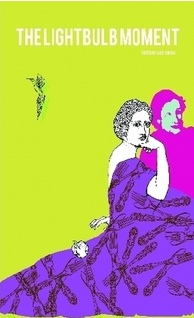
Crooked Rib publishes The Light Bulb Moment
Independent publisher Crooked Rib has spent the past year collecting the stories of why we are feminists from women and men across the UK.
Inspired by the Seal Press published ‘Click’, edited by Courtney Martin and J Courtney Sullivan; this anthology brings together writers, academics, grass-roots activists and professional feminists, as they share that moment of inspiration that brought them to feminism.
Some of the names you may recognise. Laurie Penny writing about Germaine Greer. Finn Mackay telling the story of how she went to peace camp. Jo Swinson campaigning for girls to wear trousers in her school. And then there are the women and men whose names you might not recognise, but who are working every day in the fight for gender equality and a better world for all.
Many of these stories are funny. Some are moving. Some tell of pain and trauma. Some are about family members or friends. All of them are inspiring and exciting.
Editor of The Light Bulb Moment, Sian Norris says:
‘After reading ‘Click’ I felt very strongly that we needed this book for the UK. We have such a rich feminist scene here. I thought it would be fascinating to hear how the women and men involved in UK feminist activism ‘found’ feminism. And I was right! These stories are so diverse and unique – I hope that people will enjoy reading them as much as I have.’
By bringing together the stories from women and men from a range of communities and generations, The Light Bulb Moment hopes to offer a snapshot of feminist activism in the UK today, and share the stories of the women and men involved.
The eye-catching cover was designed by illustrator Susie Hogarth.
Crooked Rib Publishing is a self-publishing, print on demand imprint set up by writer and feminist activist Sian Norris. Its aim is to publish feminist fiction and non-fiction work.
You can buy the book here: http://www.lulu.com/content/paperback-book/the-light-bulb-moment-the-stories-of-why-we-are-feminists/12145912
More on Crooked Rib Publishing (with Buy links) www.crookedribpublishing.wordpress.com
Inspired by the Seal Press published ‘Click’, edited by Courtney Martin and J Courtney Sullivan; this anthology brings together writers, academics, grass-roots activists and professional feminists, as they share that moment of inspiration that brought them to feminism.
Some of the names you may recognise. Laurie Penny writing about Germaine Greer. Finn Mackay telling the story of how she went to peace camp. Jo Swinson campaigning for girls to wear trousers in her school. And then there are the women and men whose names you might not recognise, but who are working every day in the fight for gender equality and a better world for all.
Many of these stories are funny. Some are moving. Some tell of pain and trauma. Some are about family members or friends. All of them are inspiring and exciting.
Editor of The Light Bulb Moment, Sian Norris says:
‘After reading ‘Click’ I felt very strongly that we needed this book for the UK. We have such a rich feminist scene here. I thought it would be fascinating to hear how the women and men involved in UK feminist activism ‘found’ feminism. And I was right! These stories are so diverse and unique – I hope that people will enjoy reading them as much as I have.’
By bringing together the stories from women and men from a range of communities and generations, The Light Bulb Moment hopes to offer a snapshot of feminist activism in the UK today, and share the stories of the women and men involved.
The eye-catching cover was designed by illustrator Susie Hogarth.
Crooked Rib Publishing is a self-publishing, print on demand imprint set up by writer and feminist activist Sian Norris. Its aim is to publish feminist fiction and non-fiction work.
You can buy the book here: http://www.lulu.com/content/paperback-book/the-light-bulb-moment-the-stories-of-why-we-are-feminists/12145912
More on Crooked Rib Publishing (with Buy links) www.crookedribpublishing.wordpress.com
Subscribe to:
Posts (Atom)